
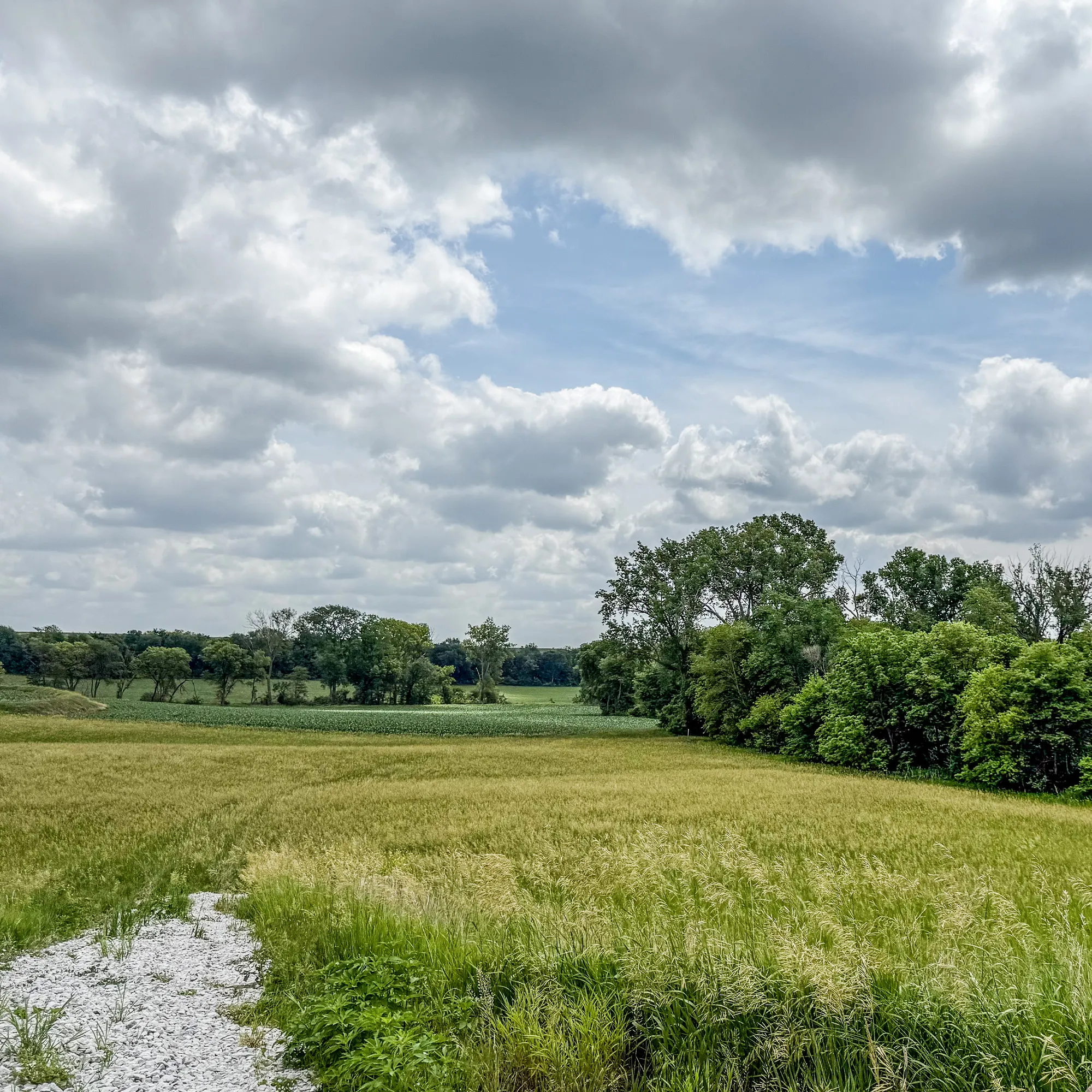
Pottawattamie County, Iowa
Council Bluffs, Iowa — Western Iowa's Biggest Small City
Quick Facts
- County
- Pottawattamie County, Iowa
- Population
- Approx. 63,000
- Median home sale price
- Approx. $220,000
- Median age
- 39 years
- School district
- Council Bluffs Community School District
Council Bluffs, Iowa is a city of roughly 63,000 people situated on the east bank of the Missouri River, directly across from Omaha, Nebraska. It is connected to Omaha by multiple bridges and functions, in many practical ways, as part of the same metro area — sharing employers, entertainment, commuter traffic, and a regional identity with its larger neighbor. But Council Bluffs is its own city with its own history, its own school systems, its own civic institutions, and a cost of living that runs noticeably lower than comparable neighborhoods in Omaha.
As the county seat of Pottawattamie County, Council Bluffs anchors western Iowa's economy and infrastructure. The city supports a diverse employment base that includes healthcare, gaming, logistics, government, and retail. Residents benefit from Iowa's tax structure while having immediate access to the full Omaha metropolitan job market — a combination that draws families, retirees, and first-time buyers looking for more purchasing power.
Council Bluffs also serves as the gateway between the Omaha metro and southwest Iowa's rural communities. Interstate 29 runs south from Council Bluffs through Mills County, connecting the city to Glenwood, Silver City, and the broader countryside in about 20 minutes. For people who work in or near Council Bluffs but want acreage instead of a subdivision lot, that 20-minute corridor makes rural living a practical daily reality.
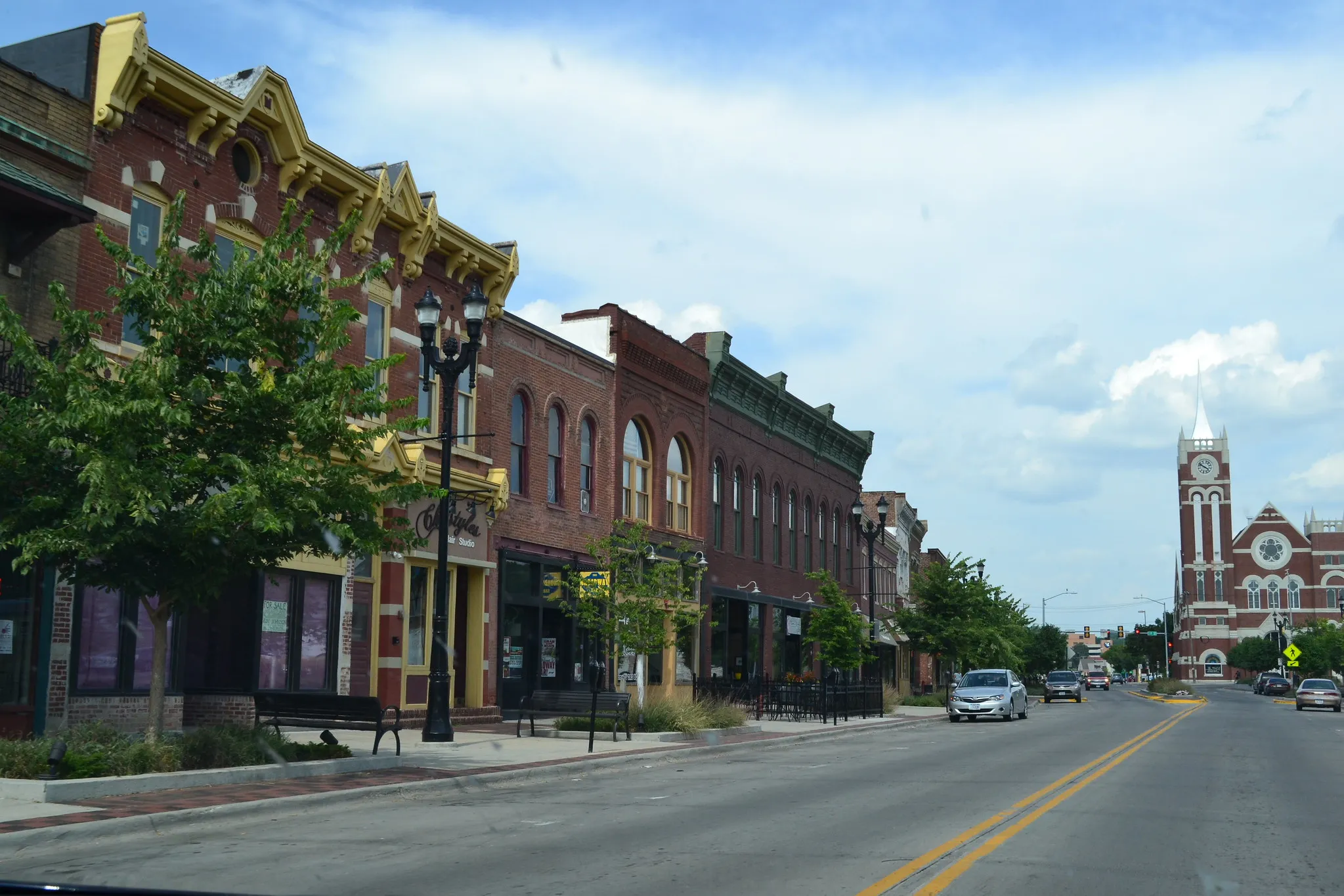
Council Bluffs at a Glance
Key statistics that make Council Bluffs one of the most affordable metro-adjacent cities in the region.
62,665
Population
$220K
Median Home Value
$64K
Median Household Income
39
Median Age
9% Below
National Cost of Living Avg
10–15 min
To Downtown Omaha
20 min
To Silver Springs
History of Council Bluffs, Iowa
Council Bluffs carries a significant place in American westward expansion. The area was first recorded by the Lewis and Clark expedition in 1804, when Meriwether Lewis, William Clark, and the Corps of Discovery held a council with the Otoe and Missouri tribes on the bluffs above the Missouri River — the event that gave the city its name. The explorers spent several days in the area, documenting the landscape, the river, and the native peoples they encountered before continuing their journey upriver toward the Pacific.
In the 1840s and 1850s, Council Bluffs became one of the most important staging points for westward migration. Thousands of pioneers gathered here before crossing the Missouri River to begin the long overland journey on the Oregon Trail. Mormon emigrants, following Brigham Young west to the Salt Lake Valley, established Winter Quarters across the river and used Council Bluffs as a major supply point. The area became a crossroads — a place where the settled East met the frontier West.
The city's trajectory changed permanently in 1863, when President Abraham Lincoln designated Council Bluffs as the eastern terminus of the first transcontinental railroad. General Grenville Dodge, a Civil War officer and railroad engineer who made his home in Council Bluffs, played a central role in the construction of the Union Pacific Railroad. The railroad brought industry, commerce, and rapid population growth. By the late 19th century, Council Bluffs was a thriving rail hub with an economy built on transportation and trade.
That history is still visible in the city today. The Union Pacific Railroad Museum chronicles the building of the transcontinental railroad. The General Dodge House — a stunning Victorian mansion completed in 1870 — stands as a National Historic Landmark. And the Lewis and Clark Monument, perched on a bluff overlooking the Missouri River valley, commemorates the expedition's council with the native tribes more than two centuries ago. Few cities of this size carry as much historical weight.
What Council Bluffs Offers
Council Bluffs is a practical, functioning city with a full complement of amenities. Residents have access to healthcare, education, entertainment, and recreation without needing to cross the river into Omaha — though that option is always minutes away.
- Direct access to Omaha via multiple Missouri River crossings
- Iowa Western Community College, a well-regarded two-year institution
- Council Bluffs Community School District and multiple private school options
- Jennie Edmundson Hospital and CHI Health Mercy, plus regional medical providers
- Harrah's Council Bluffs and Ameristar Casino Resort — major employers and entertainment venues
- Historic downtown with local shops, restaurants, and civic buildings
- Mid-America Center arena for concerts, sporting events, and conventions
- Tom Hanafan River's Edge Park along the Missouri River waterfront
- Lake Manawa State Park for boating, fishing, swimming, and camping
- Extensive trail network connecting parks, neighborhoods, and the riverfront
The casino and entertainment sector employs a significant portion of the local workforce and funds public services, giving Council Bluffs a revenue base that smaller Iowa cities lack. Gaming tax revenue supports schools, infrastructure, and community programs throughout Pottawattamie County.
Things to Do in Council Bluffs
Council Bluffs offers a surprising range of recreation, entertainment, and cultural attractions for a city its size. Whether you are interested in history, the outdoors, or a night out, there is something here.
Historic Sites
The Union Pacific Railroad Museum tells the story of the transcontinental railroad. The General Dodge House, a National Historic Landmark built in 1870, offers guided tours of one of Iowa's finest Victorian homes. The Lewis and Clark Monument provides panoramic views of the Missouri River valley from the bluffs where the expedition held its historic council.
Parks and Outdoor Recreation
Tom Hanafan River's Edge Park transformed the Missouri River waterfront into a 100-acre public park with walking trails, open lawns, and river access. Lake Manawa State Park offers 1,529 acres for boating, fishing, swimming, and camping just south of the city. The Wabash Trace Nature Trail stretches 63 miles south from Council Bluffs through the Loess Hills, connecting to communities throughout southwest Iowa.
Entertainment and Gaming
Harrah's Council Bluffs and Ameristar Casino Resort offer gaming, dining, hotel accommodations, and live entertainment. The Mid-America Center is a 12,000-seat arena that hosts concerts, sporting events, trade shows, and community gatherings. Council Bluffs' entertainment options complement what is available across the river in Omaha, giving residents of the metro area an unusually wide selection.
Council Bluffs Housing Market
The median home value in Council Bluffs is approximately $220,000, and the overall cost of living runs about 9 percent below the national average. That affordability, combined with immediate access to Omaha's job market, makes Council Bluffs an attractive option for buyers who want metro access without metro prices. Housing costs in Council Bluffs are notably lower than comparable neighborhoods in Omaha, Bellevue, or Papillion — a gap that has drawn steady buyer interest from across the river.
The housing stock in Council Bluffs ranges from historic homes near the downtown core to newer construction on the city's southern and eastern edges. Neighborhoods vary widely in character, from established tree-lined streets to modern subdivisions with contemporary floor plans. Inventory tends to move quickly in the sub-$250,000 range, reflecting strong demand from first-time buyers and families relocating from higher-cost areas.
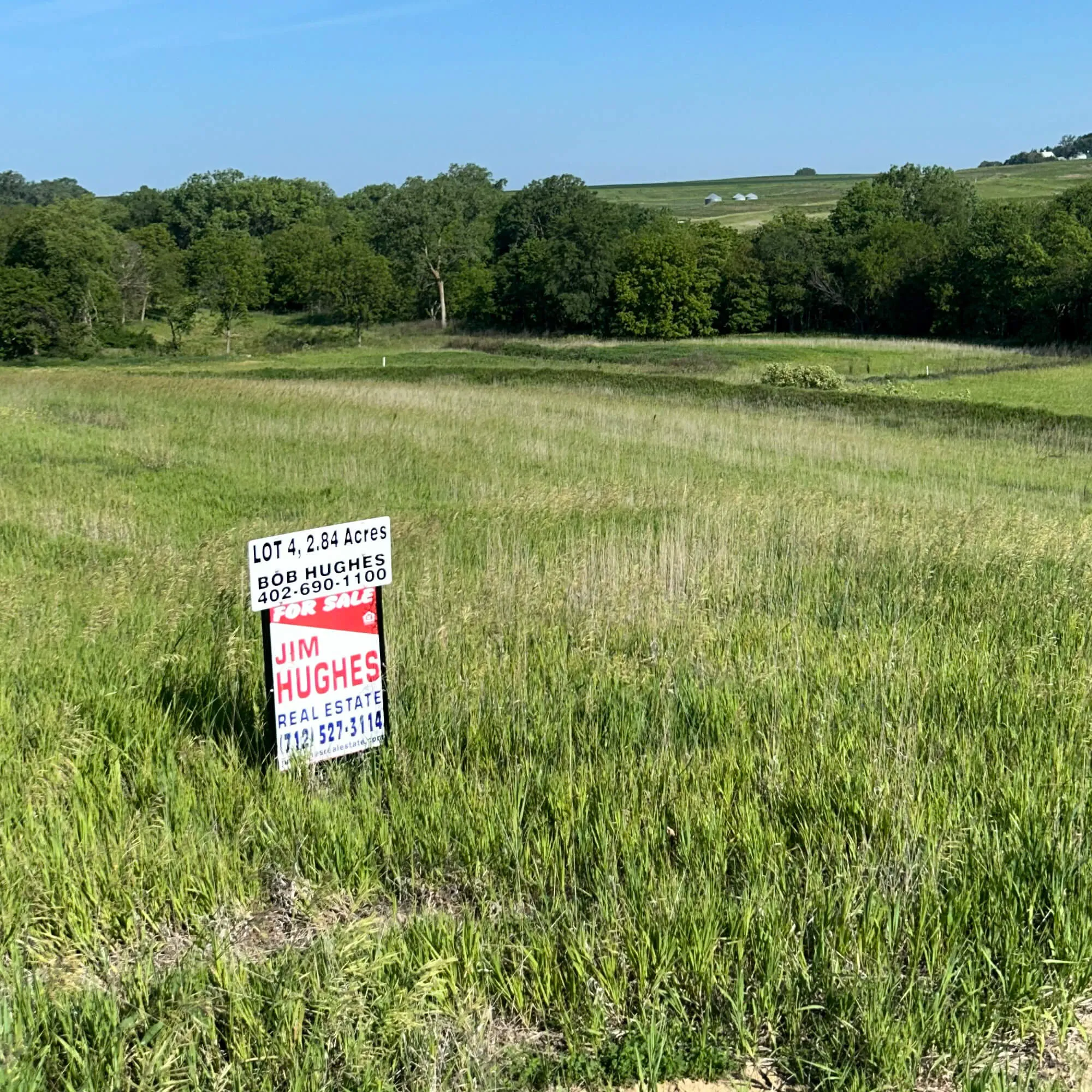
For buyers willing to look south into Mills County — about 20 minutes down Interstate 29 — rural acreage offers an even more dramatic value proposition. Multiple acres of land for a fraction of the cost of a comparable suburban lot in Council Bluffs, with the same access to the Omaha metro job market. Silver Springs Subdivision offers 2- to 7-acre lots starting at $80,000, with no required builder and no timeline to build.
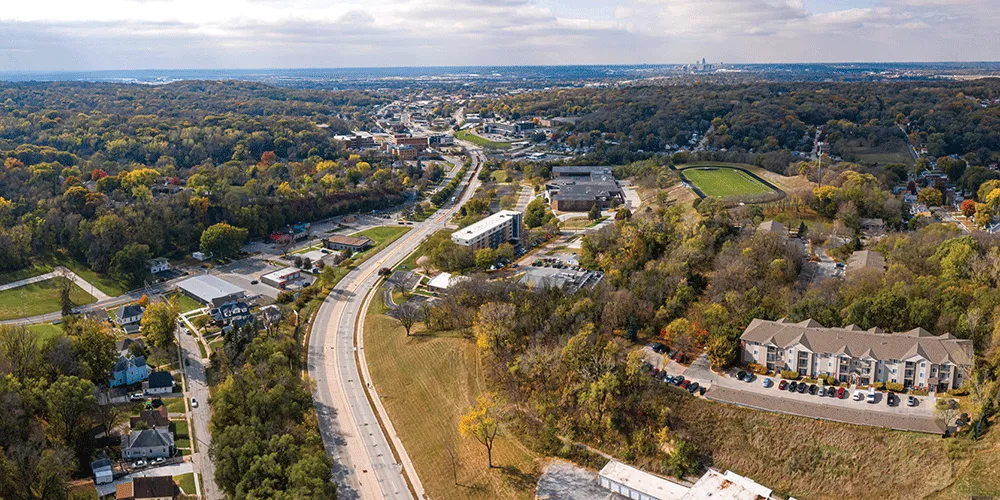
Schools in Council Bluffs
Council Bluffs offers both public and private school options, serving students from pre-K through 12th grade. The city's school systems draw families from across southwest Iowa and the broader metro area.
Council Bluffs Community School District
The Council Bluffs Community School District is one of the largest in western Iowa, serving approximately 9,000 students across more than 20 schools. The district operates multiple elementary schools, middle schools, and two main high schools — Abraham Lincoln High School and Thomas Jefferson High School. The district also offers alternative education programs, early childhood centers, and career and technical education pathways.
CBCSD has invested in facility upgrades and expanded programming in recent years, including STEM initiatives, dual-enrollment partnerships with Iowa Western Community College, and updated athletic and fine arts facilities.
Saint Albert Catholic Schools
Saint Albert Catholic Schools is a private pre-K through 12 system that draws students from Council Bluffs, the surrounding Iowa communities, and even parts of the Omaha metro. Saint Albert is known for strong academics, competitive athletics, and a close-knit school community. The system operates on a single campus that includes elementary, middle, and high school buildings.
Families in the Glenwood and Silver Springs area who prefer a private school option sometimes choose Saint Albert, which is approximately 20 to 25 minutes north via Interstate 29.
Iowa Western Community College
Iowa Western Community College, headquartered in Council Bluffs, serves as the region's primary two-year institution. IWCC offers associate degrees, workforce training, transfer programs, and continuing education. The campus includes modern facilities, student housing, and athletic programs. For families in the Silver Springs area, Iowa Western is the closest community college — about 20 minutes north on I-29.
Nearby: Glenwood Community Schools
Silver Springs Subdivision is served by the Glenwood Community School District, not Council Bluffs schools. However, families in the Silver Springs area frequently interact with Council Bluffs schools through athletics, activities, and social connections. The proximity of both districts gives families in Mills County practical access to the educational resources of the broader metro area.
Getting to Council Bluffs from Silver Springs
Silver Springs connects to Council Bluffs via Interstate 29 North — a straight, uncomplicated drive of approximately 20 minutes. From Council Bluffs, Omaha is another 10 to 15 minutes west across the river via Interstate 80 or Interstate 480.
The I-29 corridor between Glenwood and Council Bluffs is lightly trafficked compared to the Omaha-area interstates, making the commute predictable and consistent. Morning and evening rush-hour slowdowns are minimal outside the Council Bluffs interchange areas. For residents of Silver Springs who work in Council Bluffs, the commute is one of the most straightforward in the metro region — 20 minutes door to door with no merges, lane changes, or congestion chokepoints until you reach the city.
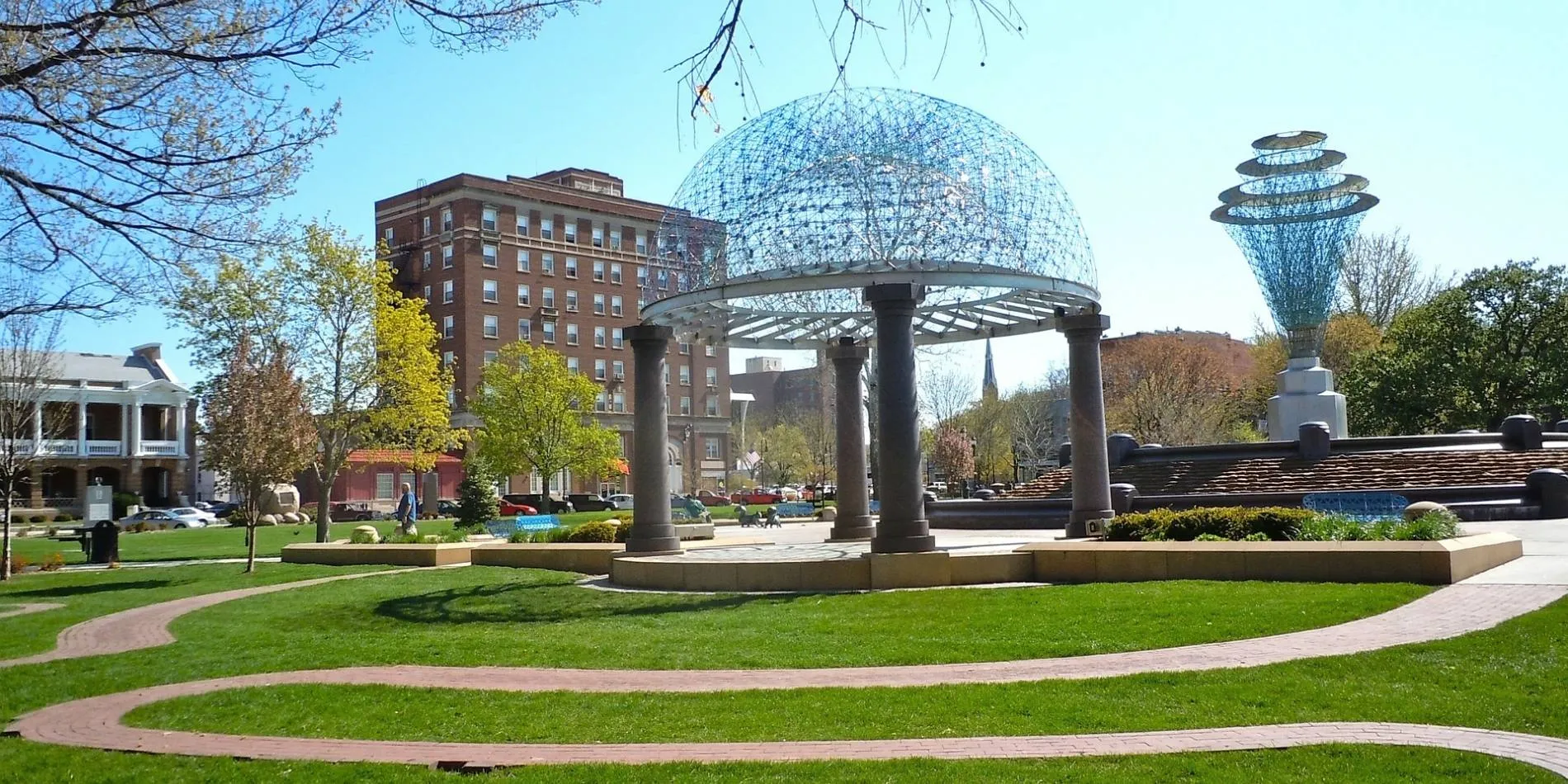
Acreage Lots Near Council Bluffs, Iowa
Silver Springs Subdivision offers 18 acreage lots in Mills County, Iowa, approximately 20 minutes south of Council Bluffs. If you work in Council Bluffs or need frequent access to the Missouri River corridor, Silver Springs provides a practical rural option within easy reach.
Silver Springs is approximately 20 minutes from Council Bluffs via Interstate 29.
View Available Lots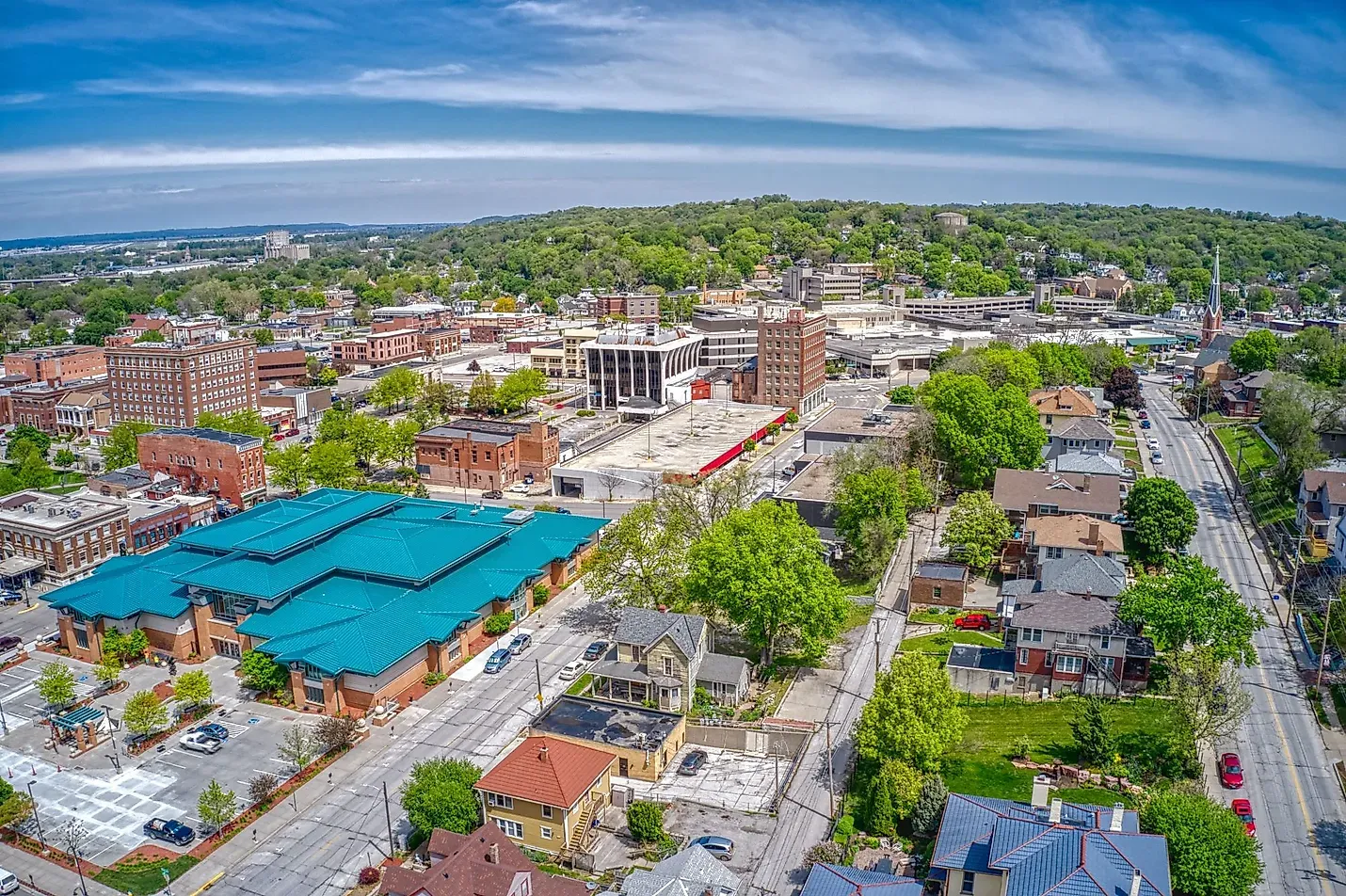
Frequently Asked Questions
Questions About Council Bluffs, Iowa
Don't see your question? Send Bob a message!
What is the population of Council Bluffs, Iowa?
Council Bluffs has a population of approximately 62,665 as of 2025, making it the largest city in southwest Iowa and the ninth-largest city in the state.
How far is Council Bluffs from Omaha?
Council Bluffs is directly across the Missouri River from Omaha — about 10 to 15 minutes by car via Interstate 80 or Interstate 480. Multiple bridges connect the two cities.
What is the cost of living in Council Bluffs?
The overall cost of living in Council Bluffs is approximately 9 percent below the national average. Housing is particularly affordable, with a median home value around $220,000 — significantly less than comparable neighborhoods across the river in Omaha.
Is Council Bluffs a safe place to live?
Council Bluffs has a mix of neighborhoods, and safety varies by area as it does in any city of its size. Many residential neighborhoods on the south and east sides of the city are quiet, well-maintained, and family-oriented. As with any relocation decision, prospective residents should research specific neighborhoods and visit in person.
What are the major employers in Council Bluffs?
Major employers include the casino and gaming industry (Harrah's and Ameristar), the Council Bluffs Community School District, CHI Health and Jennie Edmundson Hospital, Iowa Western Community College, Google (which operates a data center in the city), and various logistics and distribution companies. Many residents also commute to jobs in Omaha.
What school district serves Council Bluffs?
The Council Bluffs Community School District is the primary public system, operating more than 20 schools including Abraham Lincoln and Thomas Jefferson high schools. Saint Albert Catholic Schools offers a private pre-K through 12 option that draws students from across the region.
What outdoor recreation is available in Council Bluffs?
Council Bluffs offers extensive outdoor recreation including Lake Manawa State Park for boating, fishing, and camping; Tom Hanafan River's Edge Park along the Missouri River waterfront; the 63-mile Wabash Trace Nature Trail through the Loess Hills; and numerous city parks and trail networks throughout the community.
Is Council Bluffs growing?
Council Bluffs has seen steady investment in recent years, including riverfront redevelopment, downtown revitalization, new commercial construction, and infrastructure upgrades. Google's data center investment brought significant economic activity. While population growth has been modest, the city's tax base and amenities have expanded, driven in part by gaming revenue and its strategic location within the Omaha metro.
How far is Silver Springs from Council Bluffs?
Silver Springs Subdivision is approximately 20 minutes south of Council Bluffs via Interstate 29. The drive is straightforward with minimal traffic, making it a realistic daily commute for anyone working in or near Council Bluffs.
What is the median home value in Council Bluffs?
The median home value in Council Bluffs is approximately $220,000. For buyers looking for even more space at a lower price point, acreage lots in Mills County — about 20 minutes south — start at $80,000 at Silver Springs Subdivision.
20 Minutes South of Council Bluffs
Trade the Suburbs
for Real Acreage
If you work in Council Bluffs or commute through it, Silver Springs is a 20-minute drive down I-29. Schedule a tour and see what your money buys when you head south into Mills County.